Vaccaj: Exercise 9a
Listen to the recording
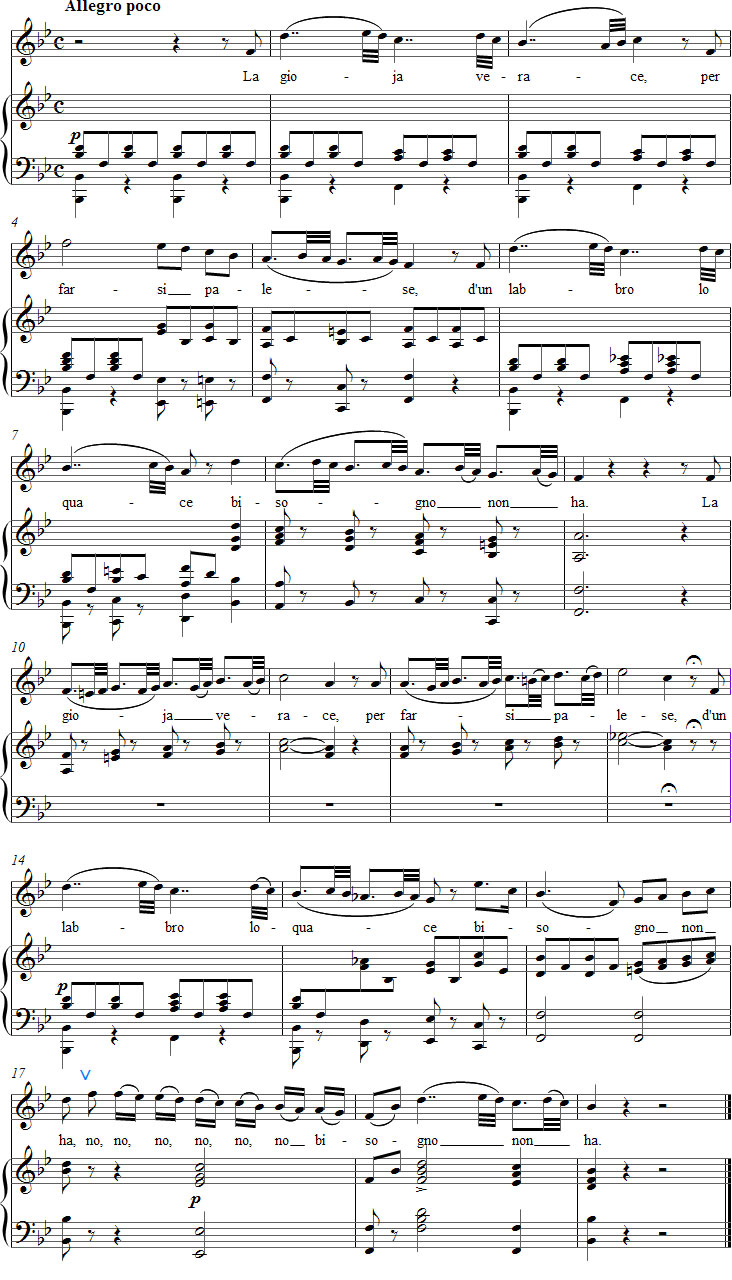
Sheet music
Lyrics
Introduzione al mordente
Introduction to the mordent
Performance instructions
This exercise is an introduction to the mordent. However, the song contains no mordents in the modern sense, or inverted mordents, but rather a series of so-called double after-grace-note figures. Whereas Exercises 8a and 8b practise ornamenting a single note, this exercise extends the ornamentation to two notes. Iffert describes this ornament as a flexible, light connection between two notes without a sharp accent, and also lists the terms double appoggiatura, sliding double appoggiatura and turn for it.
The tempo should suit the character of the composition, but should preferably be fast rather than slow.
Practice suggestions
Before singing the entire score with "agility and vigour", practise simplified variations. Begin by removing all the little melismas and sing the remaining melodic outline:
mi - do2 - si - si - la - si
mi - mi2 - re2 - do2 - si - la - sol - fa - mi
mi - do2 - si - si - la - sol
do2 - si - la - sol - fa - mi
mi - mi - fa - sol - la - si - sol
sol - sol - la - si - do2 - re2 - si
mi - do2 - si - si - la - sol - fa
re2 - si - la - mi - fa - sol - la - si - do2
mi2 - re2 - do2 - si - la - sol - fa - mi - la - do2 - si - la

Then make a softer version of the after-grace-note figure by changing the pattern to a dotted eighth note followed by two thirty-second-note triplets, and changing the remaining thirty-second notes to sixteenth notes.
Next, sing the original melody from the score, continuing to vocalise throughout, and try to retain the feeling of the previous exercise, in which the ornament emphasises the following note. Choose a tempo that prevents the small notes from being accented.
Then try singing all three versions with the text. With a six-syllable poem, this should in principle present no difficulty. When singing the original notated melody, direct the phrase towards the first beats of the odd-numbered bars and avoid accenting the third beats.
The rhythm of the song must take precedence over the correct stress patterns of the words. As in the previous exercise, compromises are necessary here too. Fortunately, the metre of this poem is more forgiving.
Ideas for interpretation
The carefree, joyful impression of the song must rise above the libretto. The recitative preceding the aria generally suggests that overwhelming happiness leads more often to tears than to speech. The "chattering" melody soon gives Metastasio's poem an ironic interpretation.
Forshufvud, G. 1994. Con lieve fiato. Lärarhandledning till Nicola Vaccajs Metodo pratico. Göteborgs universitetet.